Aircraft Wheel Chocks: A Practical Aviation Safety Guide
Learn the correct sizes, placement and standards for aircraft wheel chocks so you stay safe and compliant on the apron, in the hangar and on remote stands.
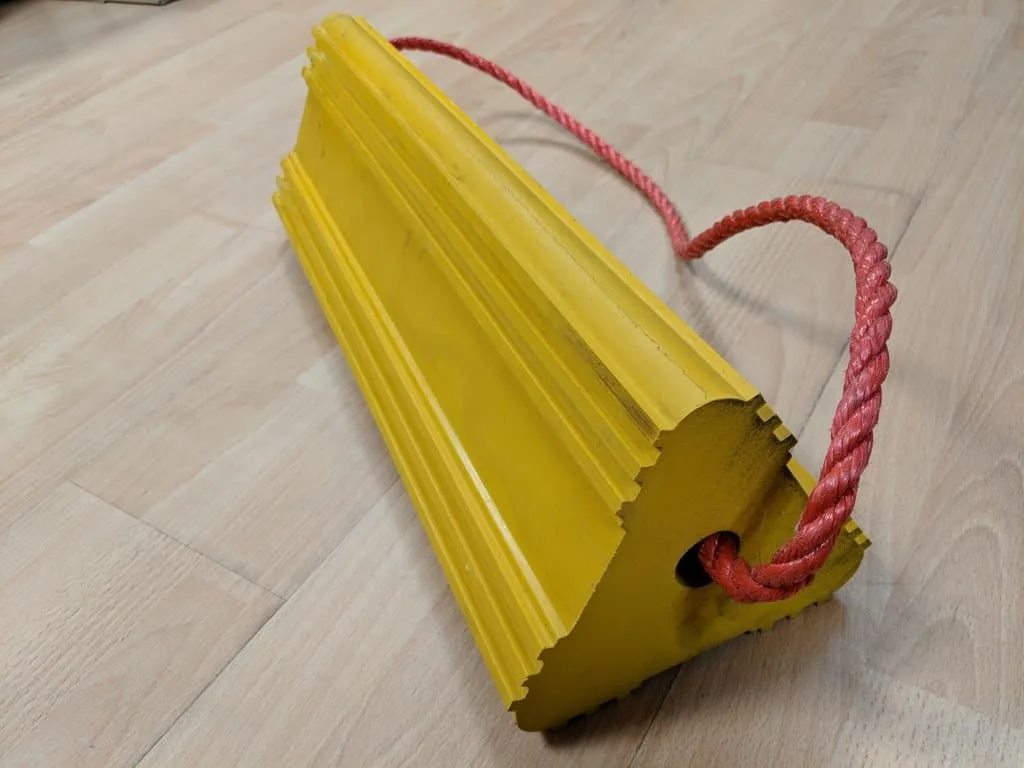
Keeping an aircraft firmly in place on the ground is a non-negotiable safety requirement in aviation. Wheel chocks look simple, yet they perform a critical job and there is a surprising amount of confusion in the field about sizes, placement and standards. This guide gives you clear answers so you can pick the right chock, use it correctly and stay compliant on the apron, hangar floor or a remote stand.
What Are Aircraft Wheel Chocks?
An aircraft chock is a wedge-profiled block that sits snugly against a tyre to prevent unintended movement. It is usually moulded from durable rubber or polyurethane and relies on friction combined with geometry to resist motion. A typical chock has a high-friction base, a rope or handle for safe retrieval and high-visibility markings. Some models are linked in pairs for rapid deployment, while others carry reflective strips for night operations.
In short, chocks are your last line of defence against roll-away risk during parking, loading, fuelling, servicing and de-icing.
What Requirements Must Chocks Meet?
Local procedures vary with your authority and airfield standards, but a common set of principles applies across most operators. Always check your company operations manual.
- Material: Robust, non-cracking and fuel-resistant rubber or PU is preferred for durability and grip.
- Size: A practical rule sets chock height at roughly one tenth of tyre diameter, with a minimum of 50 mm for light aircraft and up to 150-200 mm for larger transport types.
- Grip: The base should deliver strong friction on concrete and asphalt, including wet surfaces. Ribbed or textured bases improve hold.
- Visibility: Yellow or orange colour and reflective tape help crews confirm chock presence from a distance or at night.
- Condition: Chocks with cuts, glazing or compressive set must be removed from service.
How Much Gap Between Tyre and Chock?
None. The face of the chock should sit tight against the tyre tread when the weight settles onto it. You never leave a deliberate gap. Slight compressive contact is expected, but avoid crushing the tyre or jamming the chock under the sidewall. If you can pull the chock away with a fingertip it is not seated; if you have to kick it hard to release it, the height may be set incorrectly.
Correct Chocking Procedure
- Confirm the parking brake or gear pins, and verify the stand is level and clear of debris.
- On any slope, place the first chock on the downhill side and seat it against the tread, never under the sidewall.
- Align the second chock square against the opposite side of the same tyre.
- Visually confirm chocks in and signal the flight deck or record per your SOP.
- Remove chocks only when authorised, always pulling from the handle or rope rather than from beneath the tyre.
Choosing the Right Chock for Each Aircraft
Your first sizing decision should always match chock height to tyre diameter. Use lightweight 50-80 mm chocks for light general-aviation aircraft, reinforced 90-120 mm chocks for regional jets, and heavy-duty 150-200 mm high-friction chocks for narrow- and wide-body jets. Then weigh movement frequency, weather exposure and surface type. If you operate in snow or sand, look for bases designed to shed debris and keep their grip.