D-Section Rubber Profiles, Tipper Pads and Bumper Guards
A practical guide to choosing the right size, hardness and fixing for D-section rubber profiles, tipper pads and bumper guards in industrial settings.
Scuffs on warehouse corners, paint chips on vehicle doors, gouges in plant bodywork. Impact damage adds up quietly and eats into maintenance budgets. The tricky part is naming the protector you need so you buy the right one the first time. This guide clarifies where D-section rubber profiles, tipper pads and bumper guards belong, and how to specify them with confidence.
When to Use D-Section Rubber Profiles
A D-section is a semi-circular rubber profile with a flat back. The curved face cushions impacts while the flat side bonds or bolts to a surface. It is tough, inexpensive and simple to replace.
- Continuous protection: reliable cushioning along loading bay walls, columns and low ledges.
- Flexible fit: follows slight curves on bodywork or machinery.
- Clean finish: minimal stand-off so trolleys, pallets and doors do not snag.
How Tipper Pads Protect the Body
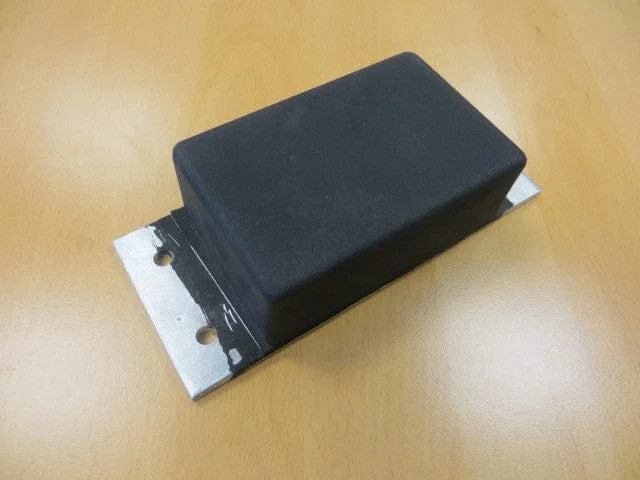
Tipper pads are sacrificial parts that sit between a tipping body and its chassis or body stops. As the body raises and lowers, the pad takes the impact and rubbing instead of the metal. A typical pad combines a rubber rubbing face with an alloy or steel base for strength and easy fixing.
- Reduces shock loads that cause cracking around hinge points and stops.
- Limits paint damage and corrosion at frequent contact points.
- Cuts noise on site and in depots, which helps near residential areas.
Pads are consumable. Inspect them regularly and replace the pad when the rubber face shows deep wear, splits or hardening.
Choosing Dimensions, Shore Hardness and Fixings
The decision comes down to three things: size, firmness and attachment.
- Dimensions: measure both the contact height to cover and the stand-off you can allow. For D-sections, the overall curve height and the width of the flat back are the key figures.
- Shore hardness: general-purpose bumper rubbers typically sit around Shore A 60 to 70. Softer compounds suit delicate finishes; harder compounds resist heavy, repeated knocks.
- Fixings: high-bond tape or construction adhesive works on smooth, dry surfaces. For high-abuse areas, choose mechanical fixings through pre-drilled holes. On vehicles, bolt-through fixings with penny washers spread the load.
Examples for Warehouses, Vans and Sites
- Warehouse: run a D-section along the wall at pallet height and protect rack uprights with column guards against forklift nudges.
- Vans: line door apertures and inner sills with short D-section pieces to stop cargo scuffing paint.
- Construction site: fit tipper pads on body stops and protect generator frames and step edges with robust bumper rubbers.
A Simple Measuring Checklist
- Identify the contact band from scuffs and marks, then measure mounting height from floor level.
- Offer a straight edge across the face to gauge how far a profile can project safely.
- Measure length in segments around corners and columns, allowing a little for trimming.
- Note the surface and the right fixing method, and check rear access for bolt-through if needed.
When the right profile, hardness and secure fixings come together, edge protectors absorb impact energy before it reaches the substrate and meaningfully cut long-term maintenance costs.