How to Choose the Right Wheel Chocks for Your Fleet
Learn how material, load capacity and correct placement determine the right wheel chock, and how to keep loading and parking operations safe on any slope.
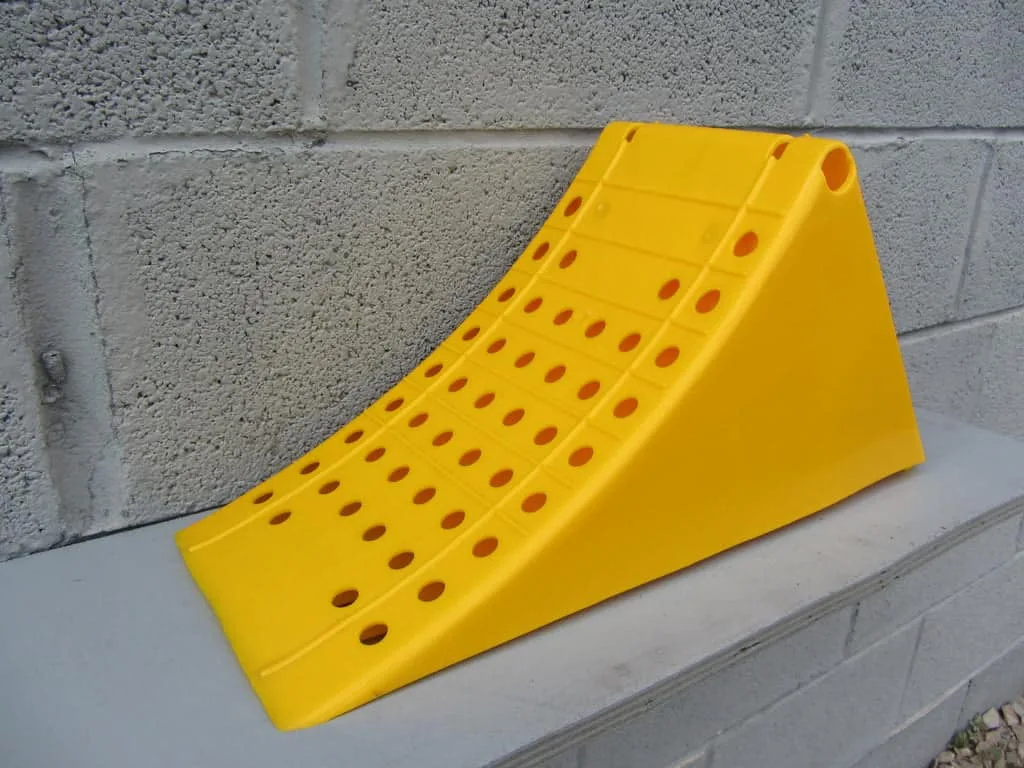
No matter how reliable a parking brake is, a stationary vehicle that starts to move on its own is always a hazard. A wheel chock is a simple wedge-shaped block placed against a tyre, yet it acts as a critical safety barrier that physically stops a vehicle from rolling away on inclines, during loading and unloading, or whenever the brake alone is not enough. Choosing the right chock protects both your staff and your cargo.
What a Wheel Chock Actually Does
By holding a wheel in place, a chock prevents a vehicle from rolling downhill or shifting during manoeuvres. Whether you handle trucks, trailers, vans or aircraft, it provides a second line of defence should the parking brake or support legs fail or be released by accident. For this reason, chocks are not merely recommended in most workplaces but specified within health and safety procedures and industry regulations.
Key Selection Criteria
No single chock suits every application. When making your choice, weigh up the following factors:
- Size and load capacity: The chock's dimensions and strength must match the vehicle's weight. Heavier vehicles demand larger, more robust chocks, so always verify the manufacturer's maximum load rating before buying.
- Material: Rubber chocks offer a high friction coefficient that resists slipping even on wet or smooth surfaces and absorbs impact well. Polyurethane models are lighter and resist oil, chemicals and UV, but their grip weakens on icy ground.
- Base design and grip: Ribbed or grooved bases lock into the surface more securely. Carry handles and reflective strips add convenience and visibility.
How to Position a Chock Correctly
A chock only does its job when placed properly. Always apply the parking brake first. Position the chock at the centre of the tyre so it sits flush against the tread; avoid placing it behind the axle or on uneven ground. On any slope, the chock must always go on the downhill side. For large trailers and trucks, good practice is to chock both sides of at least one axle, and four chocks may be preferable under heavy loads.
Rubber or Plastic?
The choice depends largely on your operating environment. Rubber chocks grip better on most surfaces and remain the most reliable option for outdoor use and heavy vehicles. Polyurethane chocks are lighter, easier to carry and resistant to spillages, making them suitable for lighter vehicles and applications where the chock is moved often. For most industrial and logistics operations, especially with heavy goods vehicles, rubber stands out.
Best Practice for Safe Use
- Inspect chocks regularly for cracks, wear and deformation.
- Store them somewhere accessible, visible and clearly marked for immediate use.
- Follow your organisation's procedures and risk assessment for placement and quantity.
Selecting a chock matched to tyre diameter and gross vehicle weight is a simple but vital precaution. When the right product meets the right practice, the risk of runaway-vehicle accidents on your site drops dramatically.