Loading Dock Bumpers: A Practical Safety and Savings Guide
Learn how correct placement, mounting and maintenance of loading dock bumpers prevent impact damage and cut costly repair bills at your facility.
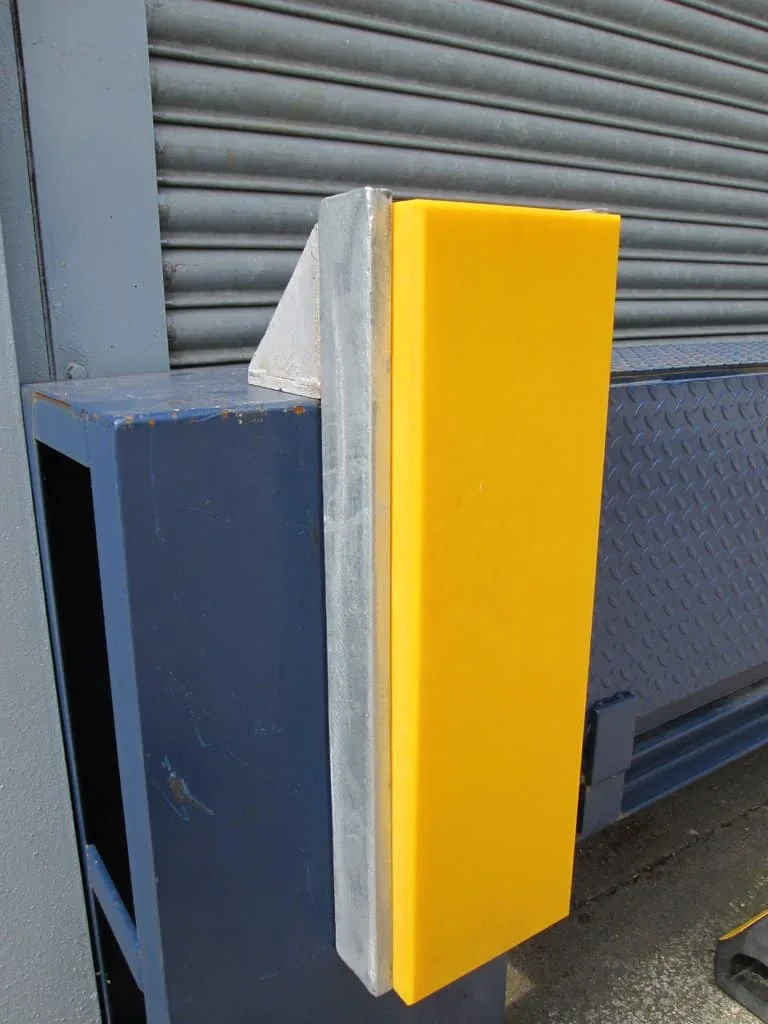
In a busy warehouse or distribution centre, the loading dock never stops moving. Trailers reverse in, pallets shift, and teams work at pace. In that rhythm even a minor knock can crack a dock edge, dent a trailer body, or trigger unwanted downtime. Loading dock bumpers provide a simple but critical buffer between the vehicle and your building. This guide takes a practical look at choosing, positioning, mounting and maintaining them.
What Dock Bumpers Actually Do
A dock bumper absorbs and deflects the impact force generated during reversing and docking, protecting both the concrete dock face and the trailer. Without one, repeated strikes lead to crumbling concrete edges, exposed rebar corrosion and deformed trailer pads. A correctly specified bumper reduces maintenance frequency, keeps your repair budget predictable and noticeably improves site safety.
Strategic Placement
Protection only works when the bumper sits exactly where contact occurs. Identifying the line a vehicle strikes as it reverses is the most important step in any installation.
- Dock face: Fit bumpers level with the bed height of your most frequent trailer type.
- Corners and edges: Add bumpers to high-contact corners to prevent direct impact.
- Adjacent walls: Where space is tight or vehicles must turn, wall-mounted bumpers give extra protection.
Before installing, survey the vehicle types your site handles and measure typical bed heights; a single standard height rarely covers an entire fleet.
How to Mount a Bumper
Fitting is straightforward but demands precision. Most bumpers are bolted or anchored directly to the dock face.
- Mark the positions: Measure and mark the fixing points on the concrete.
- Drill the holes: Bore anchor holes aligned with the bumper's mounting points.
- Secure it: Tighten the bumper with appropriate heavy-duty fixings for a flush fit.
- Verify: Confirm the bumper is level and at the correct height.
Always follow the manufacturer's instructions, and use chemical anchors where the substrate is uncertain.
Common Dock Hazards
Loading docks are fast-paced, high-risk environments. Typical hazards include:
- Collisions between reversing vehicles and dock edges
- Falls from unguarded dock edges
- Trips over loose hoses and cables
- Crushing injuries during vehicle alignment
- Equipment wear from repeated minor impacts
Combining bumpers with wheel chocks and cable protectors builds layered, dependable protection.
Maintenance and Best Practice
Regular inspection is essential to extend bumper life and maintain safety standards.
- Check weekly for cracking, splitting or loosened fixings
- Clean around mounting points to prevent corrosion
- Replace worn or missing bumpers immediately
- Choose durable materials suited to your fleet and dock geometry
Involve your team in routine checks; a fresh pair of eyes catches most issues early. Paired with chocks, lane marking and clear signage, well-placed bumpers deliver an efficient, compliant dock. A proactive step today saves time and repair costs tomorrow.