Loading Dock Bumpers: Placement and Mounting Done Right
Placing loading dock bumpers correctly protects the building, the leveller and the trailer. This guide covers position, mounting and selection step by step.
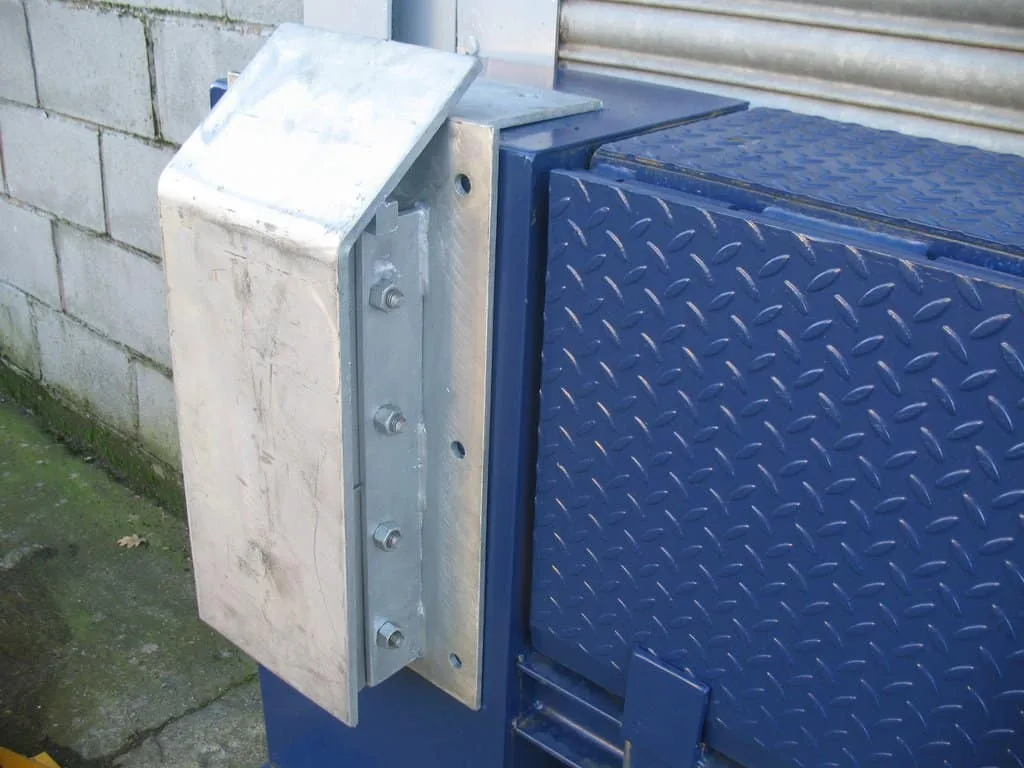
Loading dock bumpers are sacrificial pads that absorb the impact when a trailer meets the dock and protect the building behind it. Choose the right size, height and mounting method, and you cut repair costs while keeping vehicles aligned to the bay. This guide covers what bumpers do, where to position them, how to mount them, and the practical details that make the install last.
What dock bumpers do
A bumper absorbs energy at the point of contact and rebounds afterwards. That is why rubber is the standard material: it compresses under load and returns to shape. Its main jobs are:
- Protecting the dock face and leveller frame from impact and scraping.
- Holding the trailer at a controlled stand-off so doors and seals sit correctly.
- Minimising building damage during misaligned or repeated approaches.
On busy bays where trailers creep or scrub at the face, a UHMWPE wear front can be added over the rubber to reduce friction and extend pad life.
Where to position bumpers
Correct placement starts with your bay geometry and vehicle mix. For mixed HGV fleets, setting the bottom edge of the bumper roughly 250 to 300 mm above yard level places the strike zone where trailers typically land. Adjust this for low urban trailers or tall double deckers.
- Stand-off: The bumper must sit proud of any protruding steelwork so the rubber takes first contact.
- Width and spacing: Position two vertical bumpers to frame the trailer's rear impact area, kept clear of leveller lips and dock seals.
- Height stacking: If you load a wide range of deck heights, use a tall bumper or a stacked pair to widen the protected zone.
When unsure, mock up with a parked trailer and measure the contact area. Aim for the trailer to land on the middle third of each bumper.
Back plates, shims and UHMWPE fronts
A steel or galvanised back plate spreads the load and gives consistent hole centres when the dock face is uneven or you need a stronger fixing pattern. Packing shims of 20 mm or 50 mm fine-tune the stand-off, clearing cladding lips or coping stones so the rubber always takes first contact. On high-use bays, a UHMWPE front reduces friction and rubber tearing when trailers lift or settle on air suspension during loading.
How to attach a bumper
The method depends on whether you fix directly to the wall or to a back plate. The core steps are:
- Hold the plate square to the leveller opening, mark the hole positions, and check for rebar, voids or weak brickwork.
- Drill to the specified diameter and depth for your anchors, then blow out the dust.
- Fix the back plate first, shimming as needed for squareness and stand-off.
- Fit the rubber pad, install bolts front to back with the specified washers, and torque to specification.
Re-check the bolts after the first week of use. Any rocking or twist means the wall is uneven and shims should be added.
Dock safety and common hazards
Loading docks are busy, high-risk environments. Use a wheel chock for trailers without active restraints and confirm the parking brake is set. Mark walkways and add safety barriers where pedestrians cross reversing routes. Keep the apron clear of debris, wrap or ice that reduces grip. Replace split rubber or distorted plates promptly. If you run temporary lines, a cable protector ramp reduces trip risk and protects the cables.