Wheel Chocks: How Many Per Vehicle and Which Type
Choosing the right chock type and quantity prevents trailer roll-away and yard incidents. This guide covers materials, placement and upkeep in practical steps.
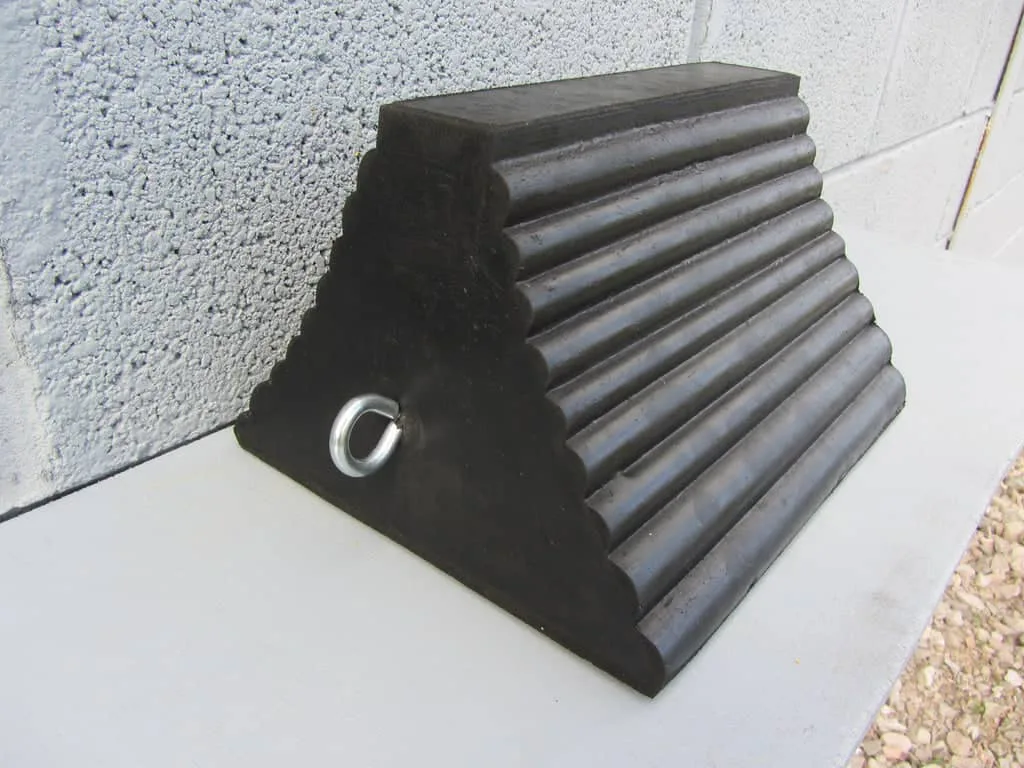
Peak shipping seasons bring full yards, tight manoeuvres and frequent trailer movements. That is exactly when a rolling trailer or a hardened, worn chock can cause costly damage or injury. Choosing the right chock and setting a clear procedure keeps your loading and parking areas calm and safe.
What a Wheel Chock Actually Does
A wheel chock is a physical barrier placed against a tyre that resists unintended movement. It does not replace brakes or landing legs; it backs them up. Its main jobs are:
- Stabilising a trailer during loading and unloading
- Preventing creep on slight gradients or when air bleeds from a parked unit
- Providing a visible reminder that a vehicle is secured
Material Types: Rubber, PU and Heavy Duty
The right material depends on vehicle weight, frequency of use and the surface underfoot.
Rubber chocks
Solid rubber delivers high friction and a forgiving contact face. It is a reliable choice for mixed surfaces and general fleet use. Premium rubber blends resist cold-weather hardening and wear better than economy grades.
Polyurethane (PU) chocks
PU is tough, wear resistant and often lighter, which helps when carrying large chocks between bays. High-visibility colours improve spotting in low light.
Specialist designs
Restricted-height profiles fit under low-clearance vehicles, while extra-tough compounds suit high-impact, high-frequency yards.
How Many Chocks You Need Per Vehicle
For a trailer parked on level ground, the rule of thumb is a minimum of two chocks, placed as an opposed pair fore and aft on the same wheel. Increase the count in these cases:
- On gradients: Use an opposed pair on the downhill wheels and add a second pair if the slope is significant.
- Heavy trailers or active loading: Use an opposed pair on at least one axle, and chock a second axle if forklifts shift weight rapidly.
- Long-parked plant: Chock both sides of one axle and consider a supplementary pair where vibration is likely.
Correct Placement on Level Ground and Gradients
Placement matters as much as quantity. Push each chock firmly under the tread near the contact patch so the tyre loads it the moment movement begins. On a slope, set the first chock on the downhill side of the wheel, tight to the tread. On wet, icy or polished concrete, a deeper tread pattern and a higher-friction face grip more reliably.
Daily Inspection, Cleaning and Storage
A quick daily check prevents most failures:
- Inspect: Look for cracks, cuts, glazing or crushing on contact faces and confirm handles are secure.
- Clean: Knock out trapped grit and rinse off salt; grit in the tread reduces friction.
- Store: Keep chocks dry, off the ground and out of direct UV, which hardens rubber and PU over time.
Matching the chock to tyre diameter, gross vehicle weight and clearance improves both safety and service life.